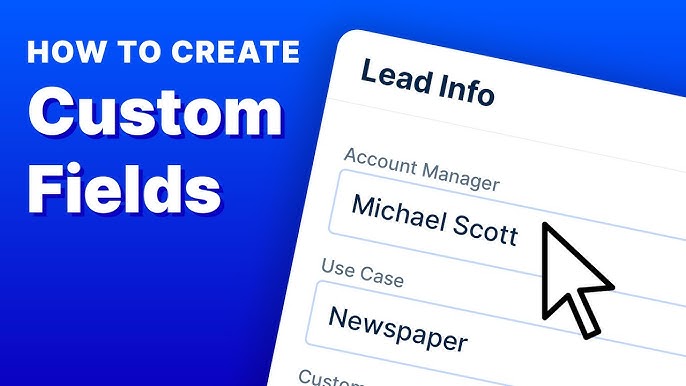
In the ever-evolving world of business, understanding your customers deeply and managing their information efficiently is critical to driving growth and delivering exceptional service. While out-of-the-box Customer Relationship Management (CRM) systems provide a solid foundation, the real power lies in custom fields—tailored data points that enable businesses to capture unique information specific to their needs. Custom fields transform a generic CRM into a finely tuned engine that fuels personalized marketing, streamlined operations, and insightful decision-making.
Sponsored Link
What Are CRM Custom Fields and Why Do They Matter?
CRM custom fields are user-defined data fields that extend the standard set of information captured about contacts, leads, companies, or deals. Unlike default fields such as name, email, and phone number, custom fields allow you to record niche details that directly impact your business processes, sales cycles, and customer interactions.
By incorporating custom fields, organizations can:
- Capture industry-specific information not covered by standard fields.
- Segment and qualify leads more effectively based on relevant criteria.
- Personalize communication and offers tailored to customer preferences.
- Automate workflows triggered by unique data points.
- Gain deeper insights through advanced reporting and analytics.
Without custom fields, CRMs risk becoming generic repositories of data rather than strategic tools that differentiate your business.
Types of CRM Custom Fields That Drive Impact
1. Demographic and Firmographic Details
Custom fields capturing demographic data (age, gender, location) or firmographic information (industry, company size, revenue) empower targeted segmentation and campaign precision.
2. Customer Preferences and Behavior
Fields tracking preferred communication channels, product interests, or buying frequency help sales and marketing teams tailor messaging and offers to increase engagement and loyalty.
3. Lead Qualification Metrics
Custom scoring criteria such as budget, timeline, authority level, or pain points provide critical insight into lead quality, allowing teams to prioritize high-potential opportunities.
4. Contract and Subscription Data
Details like contract start/end dates, subscription tiers, renewal status, and payment terms facilitate proactive account management and upsell opportunities.
5. Event and Interaction History
Capturing participation in webinars, product demos, or support tickets within custom fields creates a holistic view of customer engagement, aiding personalized follow-ups.
6. Referral and Source Information
Tracking referral sources or campaign attribution enables better ROI analysis and fine-tuning of marketing strategies.
How CRM Custom Fields Enhance Business Processes
Personalized Customer Engagement
With detailed, relevant data in custom fields, businesses can segment audiences into micro-groups and craft messaging that resonates deeply—boosting open rates, conversions, and satisfaction.
Improved Sales Efficiency
Sales teams benefit from access to actionable data such as buying readiness or decision-making authority recorded in custom fields, enabling them to focus efforts on the most promising leads.
Streamlined Automation
Custom fields serve as triggers for automation workflows—whether assigning follow-up tasks based on lead scores or sending renewal reminders—reducing manual work and accelerating response times.
Advanced Analytics and Reporting
Incorporating custom fields into reports unlocks nuanced insights into customer behaviors, campaign effectiveness, and operational bottlenecks that standard fields alone cannot reveal.
Better Collaboration Across Teams
By standardizing critical data points through custom fields, marketing, sales, customer service, and management teams operate from a unified data source, improving coordination and results.
Best Practices for Creating CRM Custom Fields
- Identify Business Needs First: Focus on capturing data that directly supports your sales, marketing, or service objectives to avoid clutter.
- Keep it Simple and Relevant: Use clear field names and limit the number of custom fields to those that add real value.
- Standardize Data Entry: Implement drop-down menus, checkboxes, or validation rules to maintain consistency and data quality.
- Regularly Review and Clean Data: Periodically audit custom fields to remove outdated or unused entries.
- Train Your Team: Ensure users understand the purpose and proper use of custom fields to maximize their effectiveness.
Examples of Custom Fields That Make a Difference Across Industries
- Real Estate: Property type preference, budget range, desired move-in date.
- E-commerce: Favorite brands, purchase frequency, preferred shipping method.
- Healthcare: Patient insurance provider, medical history notes, appointment preferences.
- Education: Course interests, enrollment status, scholarship eligibility.
- Financial Services: Risk tolerance, investment goals, client accreditation status.
Future Trends: Smarter Custom Fields with AI and Integration
The next evolution in CRM custom fields lies in automation and intelligence. AI-powered CRMs can automatically populate fields through data enrichment and predictive analytics, reducing manual input and uncovering hidden customer insights. Additionally, seamless integration with third-party tools will enable real-time syncing of custom data, keeping your CRM current and actionable.
CRM custom fields are more than just additional data points—they are the backbone of a truly customized, insightful, and efficient customer relationship management strategy. By thoughtfully designing and leveraging custom fields, your organization can unlock unparalleled customer understanding, drive smarter sales and marketing efforts, and elevate business outcomes to new heights.