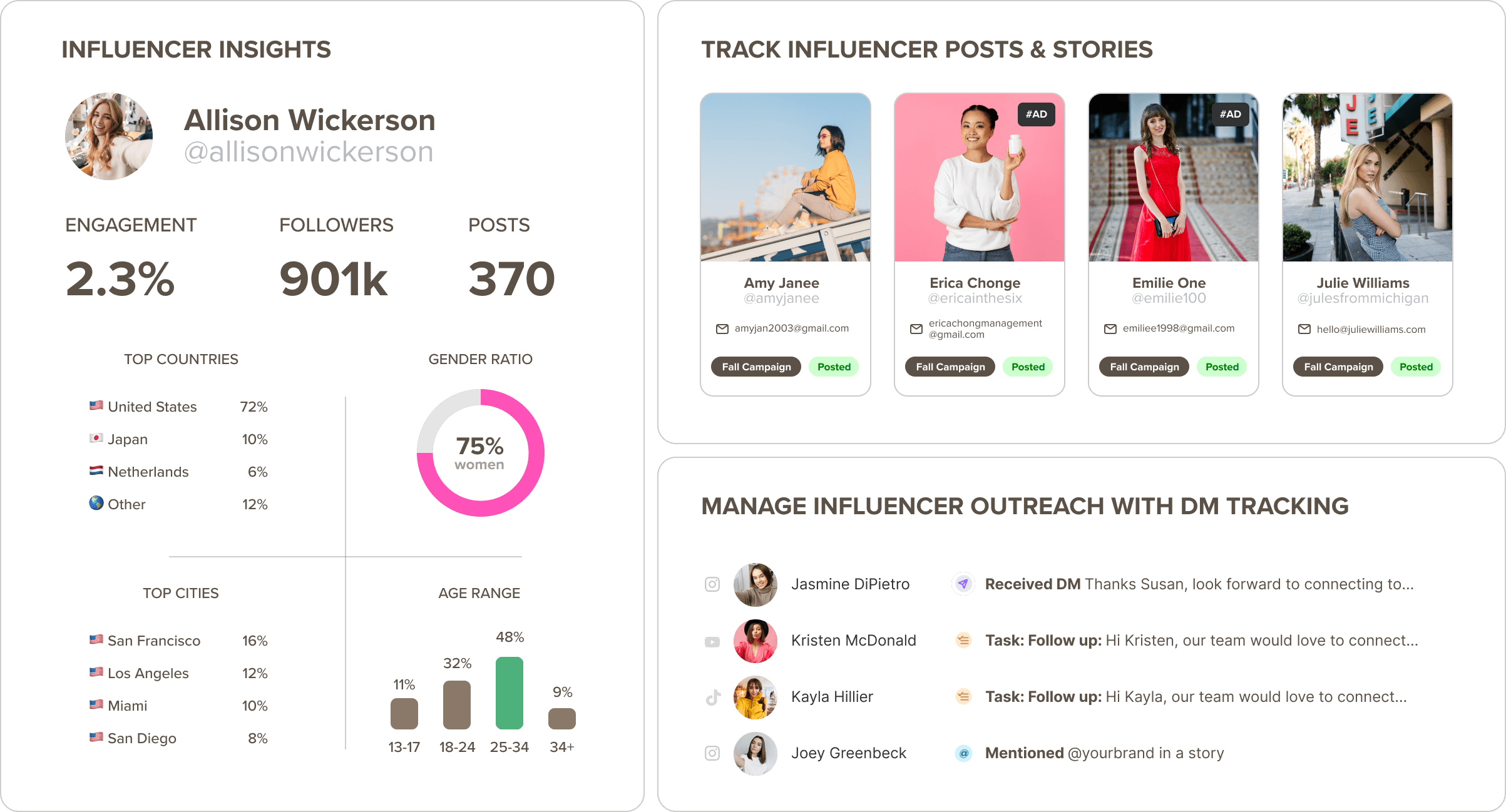
In today’s digital marketing landscape, influencer campaigns have emerged as a powerful way to reach targeted audiences authentically. However, managing and tracking these campaigns—often involving multiple influencers, platforms, and content types—can be complex and time-consuming. Integrating a Customer Relationship Management (CRM) system designed for influencer marketing enables brands to streamline campaign management, measure ROI accurately, and foster lasting partnerships.
Sponsored Link
Why Use a CRM for Influencer Campaign Tracking?
Traditional CRM systems are tailored to managing direct customer relationships, but modern CRMs equipped for influencer campaigns go beyond by offering specialized tools that handle the unique dynamics of influencer marketing. Leveraging CRM technology for influencer tracking provides:
- Centralized influencer data management, including contact info, collaboration history, and performance metrics.
- Campaign lifecycle tracking, from initial outreach to content delivery and post-campaign analysis.
- Real-time performance monitoring across social media platforms.
- Automated communication and task reminders to ensure timely follow-ups.
- Detailed reporting to demonstrate campaign effectiveness and ROI.
Without a dedicated CRM, marketers risk disorganized workflows, missed deadlines, and insufficient visibility into campaign success.
Essential Features of CRM Systems for Influencer Campaign Tracking
1. Comprehensive Influencer Database and Segmentation
Effective influencer campaign management begins with maintaining an organized database. A CRM should allow marketers to store and categorize influencers based on demographics, audience size, engagement rates, niches, and past campaign results. This segmentation enables quick identification of the right influencers for specific campaigns, ensuring alignment with brand goals.
2. Automated Outreach and Communication Management
Coordinating communication with multiple influencers simultaneously can be overwhelming. A CRM with integrated email and messaging capabilities enables automated outreach sequences, personalized proposals, contract reminders, and collaboration status updates—keeping influencer relationships organized and professional.
3. Campaign Planning and Task Management
From briefing influencers to approving content and tracking deadlines, managing campaign workflows is critical. CRM task management features help assign responsibilities, set milestones, and monitor progress in one unified platform, reducing the risk of delays and miscommunication.
4. Social Media and Performance Analytics Integration
To measure the success of influencer campaigns, CRMs should connect with social media analytics tools and platforms such as Instagram, YouTube, TikTok, and Twitter. This integration enables real-time tracking of key performance indicators (KPIs) like reach, impressions, engagement rates, conversions, and sales attributed to influencer efforts.
5. ROI and Budget Tracking
Campaign budgets can escalate quickly. CRMs that incorporate financial tracking allow marketers to monitor spending against allocated budgets, calculate ROI per influencer or campaign, and generate detailed financial reports. This transparency aids in optimizing future investment strategies.
How CRM Enhances Influencer Campaign Effectiveness
Improved Influencer Relationship Management
Building long-term relationships with influencers is essential for authenticity and sustained impact. CRMs keep a detailed history of interactions, preferences, and past collaborations, enabling brands to nurture partnerships with personalized communication and incentives.
Streamlined Collaboration and Content Approval
CRMs facilitate collaboration by allowing influencers and marketing teams to share content drafts, provide feedback, and finalize deliverables efficiently. This centralized system reduces bottlenecks and ensures campaign consistency.
Data-Driven Decision Making
With access to granular campaign data and analytics, marketing teams can quickly identify high-performing influencers, content types, and channels. This insight allows for continuous optimization of influencer selection and campaign tactics.
Scalability for Growing Campaigns
As influencer programs expand, manually tracking relationships and campaign details becomes impractical. A CRM scales effortlessly with your influencer network, supporting multiple campaigns, regions, and team members without loss of control or data integrity.
Best Practices for Using CRM to Track Influencer Campaigns
- Define Clear Campaign Goals: Set measurable objectives—brand awareness, lead generation, sales—that your CRM tracking will monitor.
- Segment Influencers Thoughtfully: Use CRM data to target influencers whose audiences align precisely with your buyer personas.
- Automate Routine Communication: Leverage CRM automation to send follow-up reminders, contract renewals, and performance check-ins.
- Integrate Social Analytics Tools: Ensure your CRM connects with the platforms where influencer content is published to capture real-time metrics.
- Regularly Review and Optimize Campaigns: Use CRM reports to evaluate campaign success and adjust influencer strategies accordingly.
- Maintain Compliance and Transparency: Document contracts, disclosures, and campaign guidelines within the CRM to ensure regulatory compliance and brand protection.
Future Trends: CRM and Influencer Campaign Management
- AI-Powered Influencer Identification: Artificial intelligence will enhance influencer discovery by analyzing engagement authenticity, audience overlap, and sentiment analysis.
- Blockchain for Transparent Tracking: Blockchain technology could provide immutable records of influencer agreements and content performance to prevent fraud.
- Omnichannel Campaign Management: Future CRMs will unify influencer marketing across emerging platforms, ensuring cohesive brand messaging.
- Predictive Analytics for Campaign Forecasting: Machine learning models will help predict campaign outcomes based on historical influencer data, enabling smarter investment.
A dedicated CRM for tracking influencer campaigns transforms chaotic influencer marketing into a strategic, measurable, and scalable business function. By centralizing data, automating workflows, and integrating performance analytics, brands can maximize their influencer marketing ROI and build authentic connections with audiences worldwide.